
As businesses gear up for 2026, staying ahead in payroll management is no longer optional—it’s a necessity. The shift towards cloud-based payroll solution is transforming how companies manage salaries, compliance, and workforce data, making processes more efficient, secure, and scalable. Whether you’re a small business or a large enterprise, investing in cloud-based payroll software is a game-changer for financial accuracy and compliance.
The way organizations manage payroll has changed significantly over the past decade. As businesses embrace hybrid work models, expand across multiple locations, and navigate evolving compliance requirements, traditional payroll methods are no longer sufficient. Companies need payroll solutions that are flexible, secure, and accessible from anywhere. A cloud-based Payroll Management Software provides businesses with the ability to process payroll efficiently while ensuring accuracy, compliance, and real-time access to payroll information.
Unlike conventional payroll systems that require manual updates and local infrastructure, cloud-based Payroll Management Systems automatically stay up to date with the latest regulations and provide centralized access to payroll data. HR and finance teams can securely manage salary processing, tax deductions, statutory compliance, reimbursements, and employee records from a single platform. This enables organizations to reduce administrative effort, improve payroll accuracy, and strengthen payroll compliance in India, regardless of workforce size or location.
The Growing Need for Cloud-Based Payroll Solution
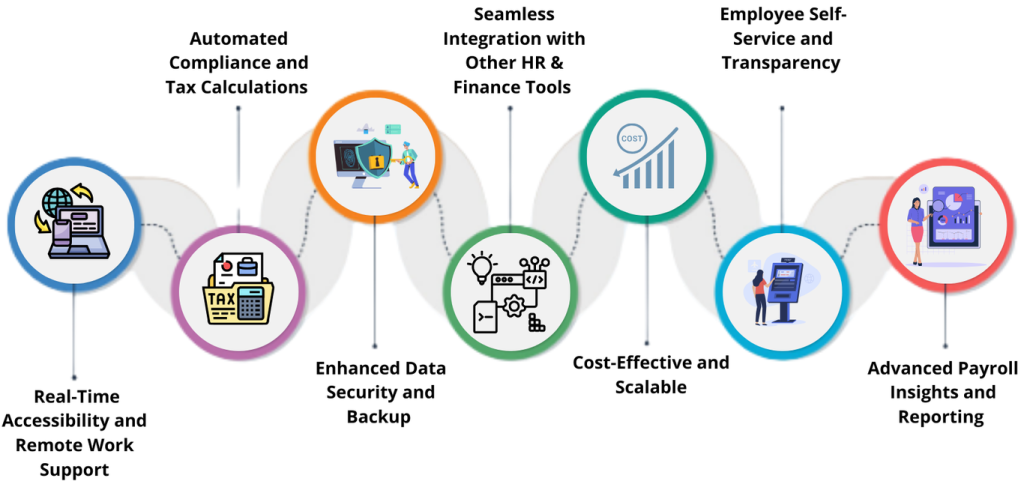
1. Real-Time Accessibility and Remote Work Support
With hybrid and remote work becoming the norm, HR teams need anytime, anywhere access to payroll data. Cloud-based payroll solution eliminate location constraints, ensuring seamless payroll processing regardless of where your team is. Employees and HR professionals can access payroll records, update information, and process salary disbursements from any device with an internet connection. This flexibility ensures no delays in salary payments, even in unforeseen circumstances like natural disasters or global disruptions.
2. Automated Compliance and Tax Calculations
Tax laws and labor regulations are constantly evolving, making it challenging for businesses to keep up. A cloud payroll system automatically updates to reflect changes, ensuring your business remains compliant with payroll taxes, social security contributions, and labor laws. The system calculates deductions such as PF, ESIC, TDS, gratuity, and professional tax with accuracy, reducing human error and minimizing the risk of penalties. Additionally, it generates government-compliant reports, making audits and filings seamless.
3. Enhanced Data Security and Backup
Unlike traditional payroll software that store sensitive data on local servers, cloud solutions use advanced encryption, multi-layer authentication, and role-based access controls to prevent breaches. Payroll data, including salary information, employee banking details, and tax records, remains protected against cyber threats. Additionally, automated backups ensure data integrity, allowing businesses to recover crucial payroll records if needed, without fear of loss due to system crashes or accidental deletions.
4. Seamless Integration with Other HR & Finance Tools
A cloud-based payroll software integrates effortlessly with other essential business solutions, such as attendance management, leave tracking, accounting software (Tally, QuickBooks, SAP), and benefits administration platforms. This integration eliminates manual data entry, synchronizes payroll with attendance records, and ensures precise salary calculations. Businesses can also automate reimbursement claims, bonus disbursements, and incentive payouts for a more streamlined payroll process.
5. Cost-Effective and Scalable
Traditional payroll solutions require on-premise infrastructure, hardware maintenance, and IT support, leading to high operational costs. In contrast, cloud payroll systems operate on a subscription-based model, making them affordable and scalable to accommodate business growth. Companies can pay for what they need, whether they have 10 employees or 10,000, ensuring that the software scales with organizational expansion without additional infrastructure investment.
6. Employee Self-Service and Transparency
Modern employees demand transparency and access to their financial records. Cloud payroll solutions offer employee self-service portals, allowing staff to view payslips, update banking details, track tax deductions, submit reimbursement claims, and download Form 16 for tax filing without HR intervention. This empowerment enhances employee satisfaction, reduces HR workload, and ensures financial clarity for every employee.
7. Advanced Payroll Insights and Reporting
Cloud payroll software provides real-time analytics and custom reports, helping businesses make informed decisions about salaries, overtime, payroll liabilities, compliance risks, and workforce budgeting. AI-driven analytics offer insights into trends, anomalies, and cost-saving opportunities, allowing businesses to optimize payroll expenses and improve financial planning.
Advantages of Cloud-Based Payroll for Modern Businesses
Cloud technology has transformed payroll management by making payroll processing faster, more reliable, and easier to manage. Organizations no longer need to worry about software installations, manual backups, or maintaining dedicated servers. Instead, payroll data is securely stored in the cloud, allowing authorized users to access payroll information anytime and from any location.
Cloud-based payroll solutions also improve collaboration between HR, finance, and management teams by providing real-time access to payroll reports, employee salary information, tax records, and statutory compliance updates. Automated workflows simplify salary calculations, attendance integration, leave deductions, overtime processing, and report generation. As a result, businesses experience fewer payroll errors, improved operational efficiency, and greater confidence in payroll accuracy.
Preparing Payroll Operations for Future Business Growth
As organizations grow, payroll complexity increases with larger workforces, multiple branches, varying salary structures, and changing statutory requirements. Cloud-based payroll systems provide the scalability needed to support business expansion without requiring significant infrastructure investments. Businesses can easily add new employees, manage multiple payroll cycles, and generate compliance reports while maintaining centralized control over payroll operations.
Integration with HRMS Software, attendance management, leave management, employee self-service, and accounting systems further enhances efficiency by eliminating duplicate data entry and ensuring seamless information flow across departments. Businesses also benefit from stronger data security, automatic software updates, disaster recovery, and advanced reporting capabilities that support long-term financial planning and workforce management. Investing in cloud payroll technology enables organizations to remain agile and competitive in an increasingly digital business environment.
Financial Year-End Plan: The Perfect Time to Switch!
As businesses close their financial year, it’s the ideal time to upgrade to a smarter payroll solution. Delayed payroll processing, compliance errors, and manual calculations can impact year-end tax filings and audits. Make the smart switch before the financial year ends and streamline payroll like never before! Avoid last-minute compliance issues, improve efficiency, and ensure seamless salary processing with SkizzleHR’s cloud-based payroll software.
Cloud-based payroll solutions have become an essential component of modern workforce management by offering greater flexibility, improved accuracy, and enhanced operational efficiency. Organizations that adopt cloud payroll technology can automate routine payroll tasks, strengthen compliance, reduce administrative workload, and provide employees with timely and transparent payroll services. This allows HR and finance teams to focus on strategic initiatives rather than manual payroll processing.
Ready to Future-Proof Your Payroll?