
In today’s digital age, many employees still do not have access to bank accounts. These “unbanked” individuals make up a significant portion of the global workforce, and companies face unique challenges in paying them promptly, securely, and in compliance with regulations. Let’s explore the most effective ways to manage payroll for unbanked employees, from cash payments to innovative digital solutions.
Despite the rapid growth of digital banking and online payment systems, many businesses across industries such as manufacturing, construction, retail, logistics, agriculture, and hospitality still employ workers who do not have access to formal banking services. Managing payroll for these unbanked employees presents unique challenges, including delayed salary distribution, limited payment transparency, higher administrative effort, and increased compliance risks. As organizations continue their digital transformation journey, ensuring timely and secure wage payments for every employee has become a critical HR and business priority.
A well-planned payroll strategy not only helps businesses pay employees accurately but also strengthens workforce trust, improves operational efficiency, and supports statutory compliance. Modern payroll software enables organizations to manage multiple payment methods, maintain accurate payroll records, automate salary calculations, and generate statutory reports with ease. By adopting an intelligent payroll management system, businesses can streamline payroll operations for both banked and unbanked employees while creating a more transparent and employee-centric workplace. This approach reduces manual intervention, minimizes payroll errors, and helps HR and finance teams focus on strategic workforce initiatives instead of repetitive administrative tasks.
Simplifying Payroll for Unbanked Employees: Strategies That Work
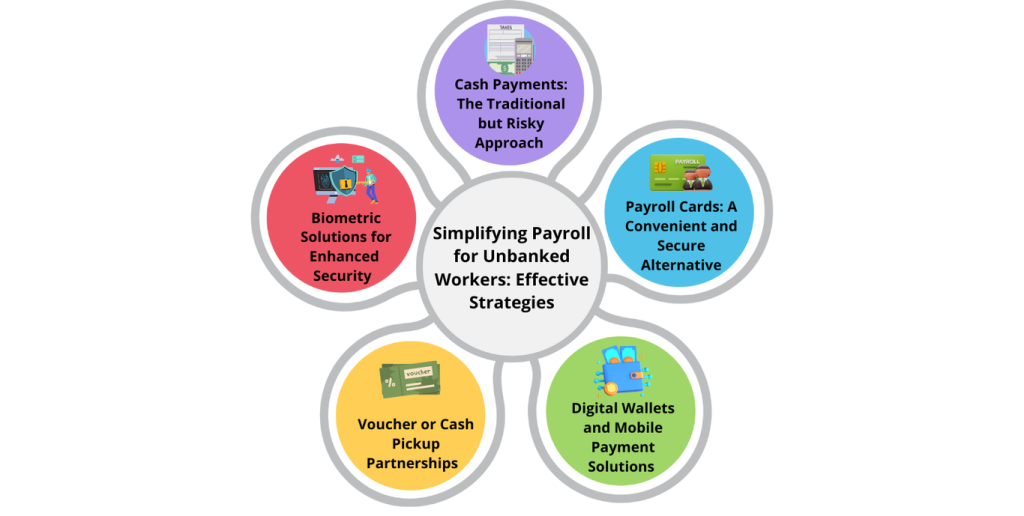
1. Cash Payments: The Traditional but Risky Approach
For unbanked employees, cash payments are often the most immediate solution. Many companies pay wages in cash, particularly in industries with high numbers of unbanked workers, such as agriculture, retail, and construction. Cash payments allow employees to receive their money directly and immediately without needing a bank account. However, this method comes with its own challenges. Cash handling introduces security risks for both employers and employees, as carrying large sums of cash can attract theft or fraud. Additionally, it’s difficult to keep accurate records with cash payments, which can complicate tax reporting and compliance. While cash may seem simple, it often introduces risks that companies might prefer to avoid.
2. Payroll Cards: A Convenient and Secure Alternative
Payroll cards offer a modern solution to pay unbanked employees, functioning much like a prepaid debit card. Employees can access their wages through the card, use it for purchases, or withdraw cash at ATMs. For companies, payroll cards provide a secure, manageable way to distribute wages without needing to handle cash. This method is both cost-effective and trackable, making it easier to maintain payroll records. Although payroll cards are a strong solution, they can come with fees for transactions like ATM withdrawals or balance inquiries, which could reduce employees’ take-home pay. Companies should work to find payroll card providers with low fees to ensure employees can access their wages without incurring extra costs.
3. Digital Wallets and Mobile Payment Solutions
With mobile technology expanding in even the most remote areas, digital wallets and mobile payment solutions have become practical options for paying unbanked employees. Digital wallets allow employees to receive, store, and spend their wages using a mobile app, bypassing the need for a traditional bank account. Employees can easily use these wallets to make purchases, pay bills, or withdraw cash. Digital wallets also generally have lower fees than traditional banking, giving employees more access to their earnings. However, companies need to ensure that these platforms are secure and accessible, especially in areas with limited internet connectivity.
4. Voucher or Cash Pickup Partnerships
In some regions, especially where digital options are limited, companies can partner with local vendors or remittance services to provide employees with cash pickup options. This involves issuing employees vouchers, which can be redeemed for cash at partner locations, such as local stores or remittance centers. Employees have the flexibility to collect their wages from a nearby location, eliminating the need for direct bank access. This approach is convenient and secure, as companies no longer need to manage cash on-site. Plus, employees have the freedom to choose when and where to redeem their wages, making it a flexible solution for remote and rural areas.
5. Biometric Solutions for Enhanced Security
In areas where identification can be challenging, biometric solutions are an innovative way to enhance payroll security for unbanked employees. Companies can integrate biometric authentication, like fingerprint or iris scans, with payroll cards or digital wallets to confirm the identity of each employee receiving wages. This added layer of security helps prevent fraud and ensures wages go to the correct individual. Although biometric systems can be costly, they’re often worth the investment for companies managing large unbanked workforces. Biometric payroll solutions provide reliable record-keeping and significantly reduce the risk of wage theft, making them a solid choice for businesses with complex payroll needs.
Traditional Payroll vs Modern Payroll Management for Unbanked Employees
| Traditional Payroll Process | Modern Payroll with HRMS Software |
|---|---|
| Manual cash salary distribution | Multiple secure payment options |
| Higher risk of payroll errors | Automated payroll calculations |
| Paper-based payroll records | Centralized digital payroll records |
| Time-consuming salary processing | Faster payroll processing |
| Limited payment tracking | Complete payroll visibility and reports |
| Difficult statutory compliance | Automated payroll compliance management |
| Manual employee verification | Secure employee database and audit trail |
SkizzleHR: Simplifying Payroll for Unbanked Employees
For businesses looking to streamline payroll management for unbanked employees, SkizzleHR offers tailored payroll solutions that support a variety of payment methods. From payroll card integration to mobile wallet compatibility, SkizzleHR enables companies to pay all employees securely and efficiently, regardless of their banking status. With SkizzleHR, businesses can maintain compliance, improve record-keeping, and provide employees with secure, accessible wage options. By choosing flexible payroll software like SkizzleHR, companies can ensure that their workforce—banked or unbanked—receives timely and dependable payroll service.
Final Thoughts: Choosing the Best Payroll Method for Your Unbanked Workforce
Managing payroll for unbanked employees requires more than simply choosing an alternative payment method. Businesses must establish a payroll process that is accurate, transparent, compliant, and capable of supporting a diverse workforce. Whether employees receive salaries through bank transfers, prepaid payroll cards, digital wallets, or other approved payment methods, maintaining proper payroll records and statutory compliance should always remain a top priority. A modern payroll management approach helps organizations reduce administrative complexity while ensuring employees receive their wages securely and on time.
As workforce expectations continue to evolve, organizations need payroll solutions that are flexible enough to support employees across different locations and employment types. SkizzleHR’s intelligent payroll management platform enables businesses to automate payroll calculations, manage statutory compliance, maintain secure employee records, and simplify salary processing through a single integrated HRMS. By investing in a modern payroll solution, organizations can improve operational efficiency, strengthen employee trust, and create a seamless payroll experience for every member of their workforce, including unbanked employees. Whether your business is growing or managing a large distributed workforce, adopting smart payroll technology is an important step toward building a more efficient, compliant, and future-ready organization.
Each payroll solution comes with distinct advantages and challenges, and the best option depends on your workforce’s specific needs and location. Whether through traditional cash payments, innovative payroll cards, digital wallets, or partnerships with local vendors, companies can find ways to effectively support unbanked employees. Embracing inclusive payroll solutions by SkizzleHR helps create a supportive work environment and ensures that all employees can access their earnings safely and conveniently.