
Managing payroll is a daunting task, irrespective of the organisation’s size. This scenario is swiftly changing over time and with automation, businesses can take out the stress level and let the software do their work. Likewise, SkizzleHR offers payroll software that will enable companies to efficiently streamline their payroll processes and help them manage and track employee expenses, statutory compliances, taxes, and more.
Payroll is closely connected with several HR functions, including attendance, leave management, employee records, expense reimbursements, and statutory compliance. When these processes operate independently, HR and finance teams often spend significant time manually transferring data between systems, increasing the risk of errors and delays. Integrating Payroll Management Software with a comprehensive HRMS Software creates a unified workflow that improves accuracy, reduces administrative effort, and enhances overall business efficiency.
Today’s organizations require payroll systems that seamlessly communicate with other business applications to support faster decision-making and better workforce management. A fully integrated Payroll Management System ensures that attendance records, leave balances, overtime, reimbursements, and employee information are automatically synchronized, eliminating duplicate data entry and ensuring payroll is processed using accurate, real-time information. This integration not only improves payroll accuracy but also strengthens payroll compliance in India and simplifies day-to-day HR operations.
Payroll Software Enables Businesses to Increase Efficiency
Payroll processing involved numerous manual tasks, such as calculating employee wages and taxes, crediting salary on time, and filing tax reports. These processes demand significant time and effort that often led to delays, inefficiencies, and increased risk and errors. However, the emergence of payroll software that automates all processes has completely transformed businesses and enabled them to streamline and simplify their payroll operations. In today’s hyper-changing pivots of business models, businesses are increasingly adapting to digital models to stay resilient and relevant. One of the critical shifts has been moving in the direction of payroll automation which has revolutionized the ways companies manage their human resources.
How Payroll Integration Improves Operational Efficiency
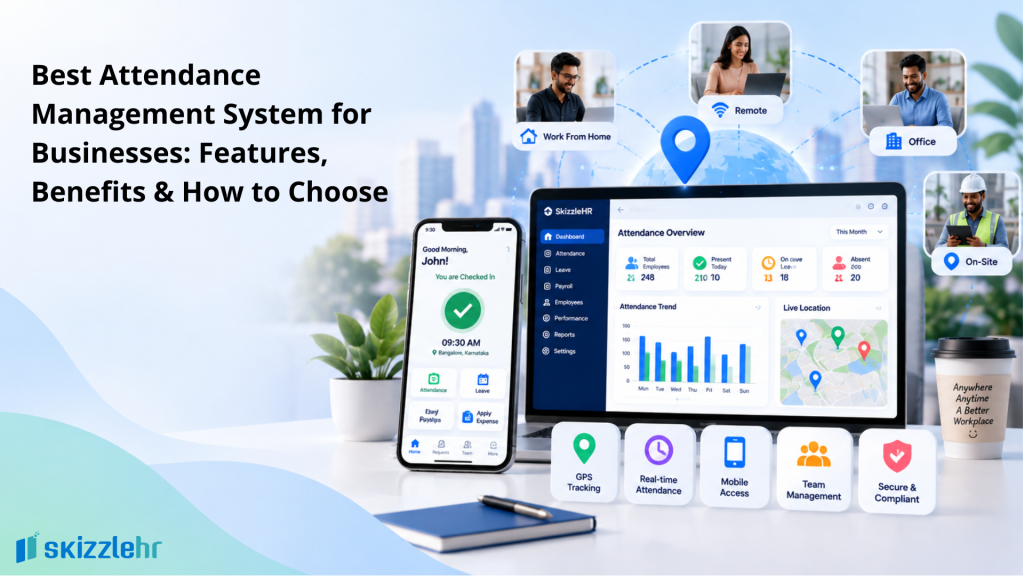
One of the biggest advantages of payroll integration is the elimination of repetitive manual tasks. HR professionals no longer need to collect attendance data separately, verify leave balances manually, or update salary revisions across multiple systems. Instead, integrated Payroll Management Software automatically retrieves workforce data from Attendance Management System, Leave Management Software, employee records, and expense management modules before payroll processing begins.
This automation significantly reduces payroll errors while shortening payroll processing time. Managers also benefit from centralized dashboards that provide complete visibility into attendance, payroll expenses, employee records, statutory deductions, and workforce costs. By connecting payroll with core HR processes, businesses can improve productivity, enhance reporting accuracy, and create more efficient HR operations without increasing administrative workload.
Creating a Connected HR Ecosystem Through Payroll Integration
Payroll integration does more than improve salary processing—it helps organizations build a connected digital HR ecosystem. When payroll works seamlessly with recruitment, onboarding, attendance, performance management, employee self-service, and compliance management, businesses gain a complete view of the employee lifecycle. This improves collaboration between HR, finance, and leadership while enabling faster, data-driven decisions.
Integrated payroll systems also strengthen financial planning by providing accurate workforce cost reports, tax summaries, reimbursement records, and payroll analytics. Employees benefit from self-service access to payslips, tax documents, attendance records, and leave balances through a single platform, reducing dependency on HR for routine requests. As organizations continue investing in digital transformation, payroll integration has become an essential step toward building a scalable, efficient, and future-ready workforce management system.
What is Payroll Software?
Payroll software refers to a tool that automates all payroll processes to streamline various tasks involved in managing payroll. These tasks include the calculation of employees’ wages, the deduction of taxes, and the filling of payroll reports. Deploying the software yields considerable time and cost savings for companies by eliminating manual data entry and processing. Moreover, it helps mitigate the risks of errors as the software is capable of adhering to specific rules and regulations.
Payroll software is instrumental in accurately computing employee wages on factors, such as their pay rate, working hours, and overtime. The software has proven beneficial to businesses that have a substantial workforce or a complex pay structure. However, one might wonder, do they really have software to manage their payrolls or you are better off sans it? In this blog, we are going to dig a little deeper and understand why businesses need payroll management software.
The Benefits of Implementing a Payroll System
Here are the factors that make it clear why the payroll system is the need of the hour:
1.Enhances Management and Reduces Delays
Generally, it has been observed that businesses invest a lot of their time in payroll activities, however implementing payroll software makes it easier for companies to govern and manage their payroll and save time by eliminating errors that are generally committed by the employees. The software enables companies to comply with the law, such as overtime, labour costs, and many more. This feature helps the management to focus on other crucial tasks.
2.Eliminates Human Errors
Payroll is the most crucial aspect that needs a lot of care and management needs to be extra careful as they might commit some mistakes in calculating the payment of employees. Manual calculation leads to errors, like mistakes in taxes, ignorance of taxable particulars, and other crucial aspects of businesses. These missteps can cause more damage to a business and its reputation. Therefore, moving towards smarter payroll software is imperative as it helps reduce mistakes and take the business to new heights.
3.Reduces Paperwork
Calculating payroll manually requires a lot of paperwork. Thus, having payroll software in the system standardized many processes, such as maintaining Excel sheets, filing tax reports and gaining documents for the same. It also saves time for HRs as it helps gather all the finance-related information in one place. Besides, employees can also manage their expenses and see how their salary has been calculated. This way companies can decrease the use of paperwork and increase transparency in their firm.
4.Updates System and Compensation Laws
The tax laws in India tend to change every five years, and it becomes challenging for HRs to manually calculate the taxes for every employee while keeping new tax regimes in mind. Having payroll software helps companies deal with all these problems, as it can automatically comply with new laws and help companies to streamline their processes to stay on top of state and nation.
Conclusion
Managing and rolling out payroll is a daunting task and any mistake in it can hugely impact businesses. Having a software solution in the system is always the best scenario to help companies flourish in the market. Payroll software is a step towards making the lives of HRs a lot easier and allowing them to sit back and relax. Similarly, SkizzleHR, a leading name in the HR industry offers payroll software that is specifically designed to meet the dynamic needs of the Indian market. Its smart and engaging user experience makes it easier to use and also helps businesses to attain their goals.
Integrating payroll with core HR processes enables organizations to improve efficiency, strengthen compliance, and eliminate unnecessary manual work. Businesses that adopt an integrated Payroll Management System benefit from greater data accuracy, faster payroll processing, improved reporting, and a better employee experience. A connected HR ecosystem also supports smarter workforce planning and long-term organizational growth.