
Creating a diverse and inclusive workplace is more significant now than ever as people are increasingly seeking to align themselves with companies that have stronger D&I policies. These policies help them attract top talent, foster innovation, and achieve better business outcomes. Implementing HR platforms helps promote diversity and inclusion as HRs have more time to focus on strategic actions, than perform mundane tasks.
Diversity, Equity, and Inclusion (DEI) have become fundamental pillars of successful organizations. Businesses today recognize that a diverse workforce brings fresh perspectives, encourages innovation, improves problem-solving, and strengthens organizational performance. However, creating an inclusive workplace requires more than hiring employees from different backgrounds—it involves implementing fair HR practices, eliminating bias, ensuring equal opportunities, and fostering a culture where every employee feels valued and respected.
Modern HRMS Software plays a significant role in supporting diversity and inclusion initiatives by helping organizations standardize HR processes, improve transparency, and make data-driven workforce decisions. From unbiased recruitment and structured performance evaluations to learning opportunities and employee engagement, digital HR platforms enable organizations to build equitable workplaces while ensuring consistency across every stage of the employee lifecycle. Technology empowers HR teams to measure diversity goals, identify improvement areas, and create inclusive strategies that contribute to long-term business success.
The Role of HR Platforms in Promoting D&I
HRMS offers several benefits for enhancing D&I initiatives, such as improving data quality, reducing human bias, and increasing transparency and accountability. These integrated systems allow organizations to more effectively track, analyze, and report on diversity and inclusivity metrics. Leveraging these modern HR platform’s features, HRs can audit processes, ensure fair treatment of all candidates, and align D&I efforts with company values. However, achieving true diversity and inclusion requires more than just good intentions—it demands a strategic approach backed by the right tools. Thus, HR software plays a pivotal role in this journey, offering powerful solutions to foster equity and create a more inclusive workplace.
HR platforms have evolved significantly over the years, and their capabilities now extend far beyond payroll processing and benefits administration. Today’s HR platforms are equipped with advanced tools designed to support D&I initiatives, ensuring that organizations can actively promote equity and inclusion at every level.
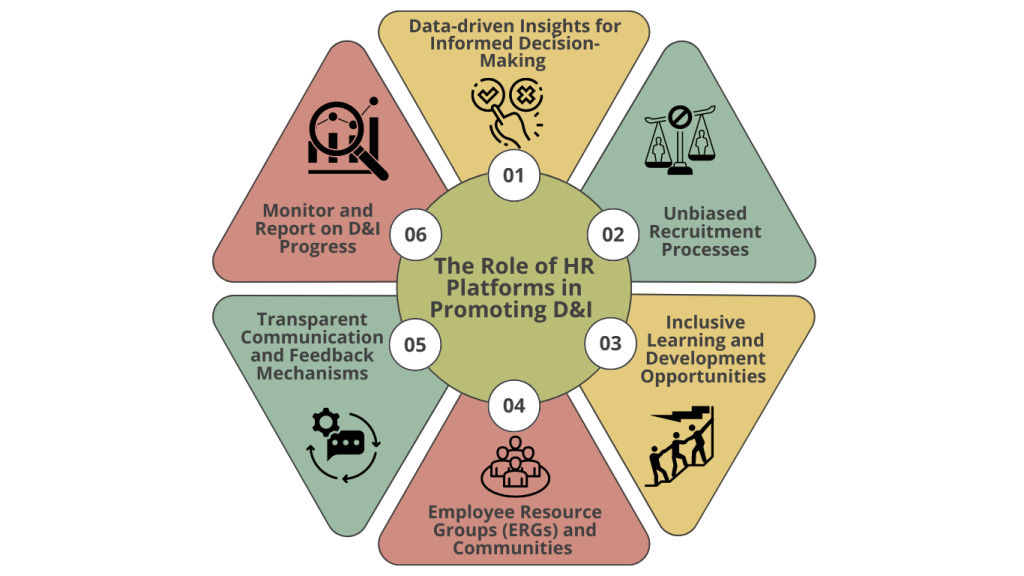
1. Data-driven Insights for Informed Decision-Making
One of the key strengths of modern HR platforms is their ability to collect and analyze vast amounts of employee data. By leveraging analytics tools, HR leaders can identify patterns and trends related to diversity within their organizations. For example, data can reveal disparities in hiring practices, promotion rates, or pay equity across different demographic groups. Armed with this information, organizations can take targeted actions to address these gaps and ensure fair treatment for all employees.
2. Unbiased Recruitment Processes
Bias in recruitment is a significant barrier to becoming a diverse and inclusive organization. By having HR platforms at their disposal, companies can mitigate biased recruitment processes. They can adopt blind recruitment processes that can help them remove details, such as names, genders, and ages from applications during the initial screening process. Additionally, AI-driven tools can analyze job descriptions to ensure they are inclusive and free from language that might inadvertently discourage certain groups from applying. By creating a more equitable recruitment process, HR platforms can help organizations attract a diverse pool of talent.
3. Inclusive Learning and Development Opportunities
Constant learning and development are crucial for employee growth, however, their unequal access or opportunities can be quite equitable. HR platforms can support this by providing personalized learning paths that cater to the diverse needs of employees. These platforms can also track the participation of all employees in the training programs and ensure everyone has access to resources to succeed.
4. Employee Resource Groups (ERGs) and Communities
ERGs are vital for fostering a sense of belonging within the workplace and HR platforms can facilitate the creation and management by providing dedicated spaces for these groups to connect, share resources, and collaborate on initiatives. These platforms can also help track the impact of ERGs, providing insights into their role in promoting inclusion and supporting the overall D&I strategy.
5. Transparent Communication and Feedback Mechanisms
Open and trusted communication is essential for building an inclusive workplace and HR software facilitates that. They offer tools for real-time feedback, anonymous surveys, and suggestion boxes. Thus, allowing employees to voice their concerns, share ideas, and provide input on D&I initiatives without fear of retribution. Moreover, HR platforms can ensure that this feedback is acted upon, fostering a culture of continuous improvement and accountability.
6. Monitor and Report on D&I Progress
Measuring progress is key to the success of any D&I strategy. HR platforms can generate comprehensive reports that track the organization’s D&I efforts over time. These reports can include metrics such as diversity ratios, retention rates, and employee satisfaction scores, broken down by demographic groups. By regularly reviewing these reports, organizations can assess the effectiveness of their D&I initiatives and make data-driven decisions to enhance their strategies.
How HR Technology Supports Diversity and Inclusion
Building an inclusive workplace requires structured HR processes that promote fairness and consistency across recruitment, employee development, promotions, and performance management. HR technology helps organizations reduce unconscious bias by standardizing workflows, maintaining transparent employee records, and providing measurable workforce insights that support equitable decision-making.
Organizations can leverage HR software to monitor workforce diversity, track hiring metrics, evaluate employee development opportunities, conduct engagement surveys, and analyze retention trends across different employee groups. Digital learning platforms also make training programs on diversity, inclusion, workplace ethics, and unconscious bias more accessible to employees. By combining technology with inclusive HR policies, organizations can strengthen employee trust while creating a workplace where every individual has equal opportunities to succeed.
Creating an Inclusive Workplace for Long-Term Success
Diversity and inclusion are ongoing organizational commitments rather than one-time initiatives. Businesses should regularly review HR policies, recruitment practices, leadership development programs, and employee feedback to ensure they continue supporting an inclusive work environment. Encouraging open communication, recognizing employee contributions, and promoting equal career opportunities help strengthen workplace culture and improve employee engagement.
An inclusive workplace also enhances employer branding by attracting top talent who value diversity and equitable work environments. Employees who feel respected and included are more likely to remain engaged, collaborate effectively, and contribute to organizational growth. As workforce expectations continue to evolve, organizations that prioritize diversity and inclusion are better positioned to build resilient, innovative, and future-ready teams.
Conclusion: The Future of D&I in the Workplace
As the business landscape continues to evolve, so too must the approach to diversity and inclusion. HR platforms, such as SkizzleHR offer a powerful toolset for organizations committed to creating a more equitable workplace. By leveraging these platforms, companies can not only attract and retain a diverse workforce but also foster a culture of inclusion where every employee feels valued and empowered to contribute their best. In doing so, organizations can unlock the full potential of their teams, driving innovation, growth, and long-term success.
Diversity and inclusion are essential drivers of innovation, collaboration, and sustainable business growth. Organizations that embrace equitable HR practices create stronger workplace cultures where employees feel valued, respected, and empowered to perform at their best. By combining inclusive leadership with digital HR solutions, businesses can improve employee engagement, strengthen retention, and create opportunities for every member of the workforce.