
The evolution of payroll management has seen a remarkable transformation in recent years, driven by technological advancements and the growing need for efficiency and compliance. At the forefront of this revolution as cloud-based payroll solutions, which are redefining how organizations process salaries, manage compliance, and ensure employee satisfaction.
As businesses continue to embrace digital transformation, payroll management has evolved from a manual administrative function into a strategic business process. Organizations today need payroll solutions that are accurate, secure, scalable, and accessible from anywhere. Traditional payroll systems often struggle to keep pace with changing compliance requirements, remote work environments, and growing workforce expectations. This is where cloud-based payroll software has become an essential solution for businesses looking to simplify payroll operations while improving overall workforce efficiency.
A modern cloud-based payroll system enables HR and finance teams to automate salary calculations, statutory deductions, tax compliance, and employee payroll records through a centralized platform. With real-time access to payroll information, secure cloud storage, and seamless integration with attendance and leave management, businesses can eliminate repetitive manual work while ensuring employees receive accurate and timely salary payments. By adopting cloud technology, organizations can improve productivity, reduce payroll errors, and create a more connected and future-ready workplace.
Payroll Made Smarter: Cloud-based Payroll Software
The adoption of cloud-based payroll services is not just an incremental upgrade from traditional systems; it’s a transformative shift that fundamentally changes how businesses handle payroll management. Let’s break down each point in greater detail to understand the profound impact of this technology:
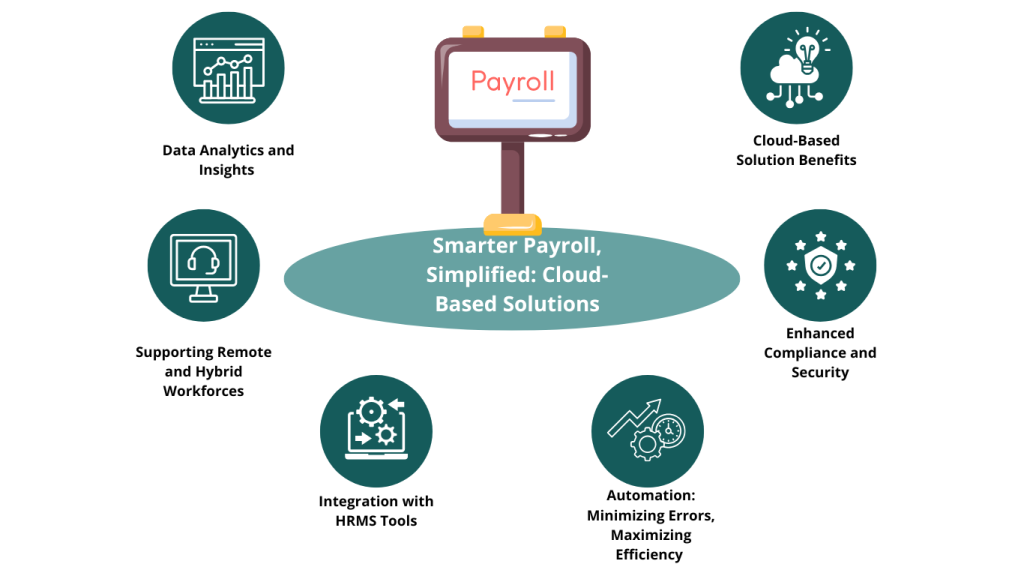
1. The Shift to the Cloud: Why It Matters
Errors from manual data entry, lack of real-time updates, and the rigidity of on-site servers make traditional and on-premises systems cumbersome.
Cloud-Based Solution Benefits:
- Real-Time Access: Cloud-based platforms allow businesses to access payroll data anytime, anywhere. This is especially critical in fast-paced industries or businesses with multiple locations, ensuring that payroll information is always up-to-date and accessible to decision-makers and employees alike.
- Cost-Efficiency: With cloud-based payroll, businesses save on the costs of physical servers, IT staff for maintenance, and recurring software updates. The subscription-based model spreads out costs, making it budget-friendly even for smaller companies.
- Scalability: As a business grows, so does its workforce. Traditional systems often struggle to scale, requiring costly upgrades. Cloud solutions, however, expand seamlessly, accommodating more employees, tax jurisdictions, and additional features as needed.
2. Enhanced Compliance and Security
Payroll involves sensitive employee data, tax obligations, and adherence to labor laws. Non-compliance can lead to hefty penalties, reputational damage, and employee dissatisfaction. However, by using payroll software you can:
- Automatic Updates: Tax laws and labor regulations frequently change. Cloud systems are updated automatically, ensuring calculations, deductions, and filings align with current laws.
- Secure Access: Advanced encryption technologies, multi-factor authentication, and role-based access control safeguard sensitive payroll data from unauthorized access.
- Data Backups: Regular and automated backups mean even in the event of cyberattacks or system failures, critical payroll data remains intact.
3. Automation: Minimizing Errors, Maximizing Efficiency
Manual payroll operations are error-prone and time-consuming, often resulting in inaccurate tax filings, late salary payments, or mismanagement of employee benefits. Moreover, automation transforms payroll:
- Tax Calculations: Complex tax structures, including deductions, exemptions, and
- local levies, are automatically calculated, reducing the likelihood of costly mistakes.
- Salary Revisions: Adjustments to salaries, bonuses, or promotions are effortlessly incorporated into payroll cycles.
- Payslip Generation: Employee payslips are generated and distributed electronically, saving administrative time and ensuring confidentiality.
4. Integration with HRMS Tools
In traditional setups, payroll often operates as a standalone function, creating inefficiencies in tracking attendance, leave, and performance data for payroll processing. Modern cloud-based payroll systems integrate seamlessly with HRMS platforms, enabling:
- Unified Employee Management: Attendance, leaves, and performance data feed directly into payroll calculations.
- Expense Reimbursements: Automates expense approvals and payments, reducing delays and manual oversight.
- Centralized Data: Combines payroll with other HR functions, providing a single source of truth for employee data.
5. Supporting Remote and Hybrid Workforces
The shift to remote and hybrid work models has created unique payroll challenges, including location-based tax compliance and flexible payment arrangements. Cloud-payroll supports flexibility that includes:
- Global Accessibility: Employees and employers can access payroll portals from anywhere.
- Location-Based Calculations: Automatically adjusts for regional tax regulations and exchange rates for international teams.
- Flexible Payment Options: Supports diverse payment methods, from direct deposits to digital wallets, catering to modern workforce preferences.
6. Data Analytics and Insights
Payroll is not just a function but a goldmine of workforce data that, when analyzed, can inform strategic decisions. Cloud payroll empowers HR and finance teams with actionable insights, enabling data-driven decisions that align payroll strategies with broader business goals. Using payroll businesses can:
- Trend Analysis: Understand workforce trends like absenteeism or overtime spikes.
- Cost Allocation: Break down payroll costs by department or role.
- Tax Insights: Track compliance and tax liabilities with precision.
Traditional Payroll vs Cloud-Based Payroll Software
| Traditional Payroll System | Cloud-Based Payroll Software |
|---|---|
| Office-based payroll processing | Access payroll from anywhere |
| Manual software updates | Automatic cloud updates |
| Higher maintenance costs | Lower IT and infrastructure costs |
| Separate HR and payroll systems | Integrated HRMS and payroll platform |
| Limited reporting | Real-time dashboards and analytics |
| Manual backups | Secure cloud backup and recovery |
| Difficult scalability | Easily scales with business growth |
Why Cloud-Based Payroll Is the Future of Workforce Management
Workforce management is no longer limited to processing salaries every month. Modern organizations require payroll systems that can support remote employees, multiple office locations, regulatory compliance, and real-time business reporting. Cloud-based payroll software offers the flexibility and scalability needed to manage these changing workforce requirements without increasing administrative complexity.
Key advantages of cloud-based payroll include:
- Anytime, anywhere access to payroll information
- Automatic statutory compliance updates
- Faster payroll processing with minimal manual intervention
- Secure cloud storage and encrypted employee data
- Integration with attendance, leave, and HRMS modules
- Real-time payroll reports and analytics
- Employee self-service access to payslips and tax documents
- Reduced payroll processing costs
- Easy scalability as the business grows
- Better collaboration between HR and finance teams
With these capabilities, organizations can build a payroll process that is efficient, transparent, and adaptable to future business needs.
Final Thought: A Paradigm Shift in Payroll
Cloud-based payroll solutions represent a significant leap forward in payroll management. They are not just tools but comprehensive solutions that simplify processes, enhance compliance, and enable businesses to adapt to a rapidly changing world. SkizzleHR offers cloud-based payroll software with features like automation, real-time access, enhanced security, and seamless integration with HR tools.
Cloud-based payroll software has transformed payroll management by making it more accurate, accessible, and efficient for businesses of every size. By automating salary calculations, statutory compliance, payroll reporting, and employee self-service, organizations can significantly reduce administrative effort while improving payroll accuracy and employee satisfaction. The flexibility of cloud technology also enables businesses to adapt quickly to changing workforce needs, whether employees are working from the office, remotely, or across multiple locations.
SkizzleHR’s Cloud-Based Payroll Software provides organizations with a secure, intelligent, and fully integrated payroll management solution designed for today’s digital workplace. Combined with attendance management, leave management, compliance tracking, employee self-service, and HR analytics, SkizzleHR helps businesses streamline payroll operations while maintaining complete compliance with statutory regulations. As organizations continue investing in digital HR transformation, adopting cloud-based payroll software is a strategic step toward building a more productive, compliant, and future-ready workforce.
Discover the power of streamlined payroll management and future-proof your payroll operations today!